
Computer IELTS vs. Paper IELTS in India: Which Format Should You Choose?
Many test takers sit on the IELTS registration page longer than they’d like to admit, trying to choose between the computer-based (CB) and paper-based (PB) formats. Both options lead to the same scores, but the experience can feel completely different. This guide breaks down the differences, advantages, and real-world factors that help you decide which format genuinely fits your strengths.
What’s Actually Different Between the Two Formats?
Both tests follow the same structure, scoring system, and global acceptance. British Council confirms this clearly. The real difference lies in how the test is delivered.
Computer-Based IELTS
- Listening, Reading, Writing on a computer
- Speaking remains face-to-face or conducted virtually
- More test dates, often daily
- Results in 3–5 days
Paper-Based IELTS
- All sections except Speaking done on paper
- Speaking face-to-face or virtual
- Fewer test dates, usually specific Saturdays
- Results in 7–10 days
Does One Format Score Better?
IDP data shows no statistical difference in band scores between CB and PB. Performance depends on your English ability and how comfortable you are with the format’s mechanics.
Side-by-Side Comparison: CB vs. PB
Availability
- CB: Multiple dates weekly
- PB: Limited dates monthly
Speed of Results
- CB: 2–3 days
- PB: Around a week
Booking Flexibility
- CB: Book closer to your desired test date
- PB: Requires early planning
Writing Experience
- CB: Type essays, edit freely
- PB: Handwrite essays, edit manually
Reading Experience
- CB: On-screen highlighting
- PB: Annotate directly on paper
Listening Experience
- CB: Headphones, clearer sound
- PB: Speaker system in the room
Word Count
- CB: Automatic
- PB: Manual counting
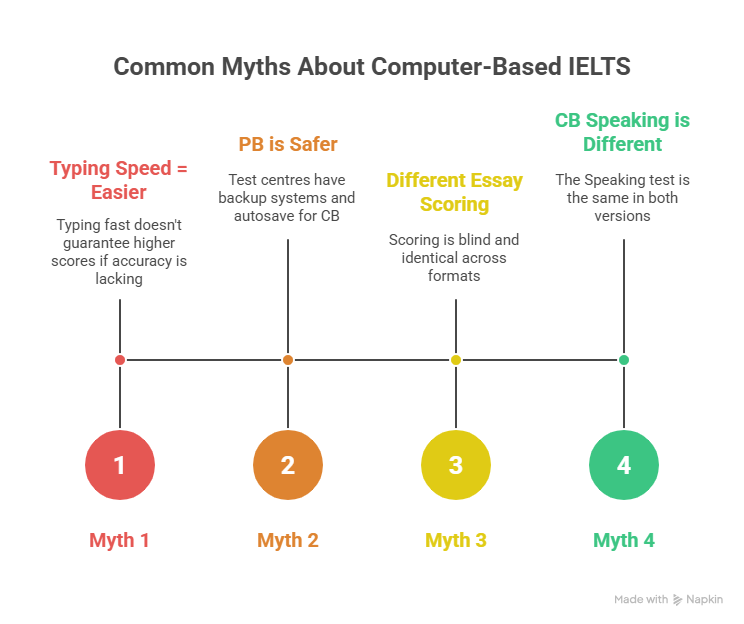
Common Myths That Confuse Test Takers
“CB is easier because I type fast.”
Typing speed helps only if accuracy matches it. Examiners assess English quality, not typing ability.
“PB is safer because computers crash.”
Centres have backup systems and continuous autosave.
“Examiners score CB essays differently.”
Scoring is blind and identical across formats.
“CB Speaking is different.”
The Speaking test is the same in both versions.
How Your Personal Strengths Influence Your Choice
Your decision should reflect how your brain works under exam pressure.
Handwriting vs. Typing
- If handwriting gets messy under stress, CB is safer.
- If typing slows you down, PB may give you more control.
Time Constraints
- Tight deadlines (university applications, PR timelines)?
CB’s fast results help. - Flexible timelines?
PB is perfectly fine.
Comfort Level
- If screens tire you, PB feels natural.
- If you think faster digitally, CB flows better.
Try a 40-minute writing test both ways. The easier one usually reveals itself.
Pros and Cons at a Glance
Computer-Based IELTS: Pros
- Faster results
- More test dates
- Automatic word count
- Easy editing
- No answer transfer
- Digital highlighting
- Familiar digital experience for many candidates
Computer-Based IELTS: Cons
- Requires steady typing speed
- Screen fatigue
- Scrolling through passages
Paper-Based IELTS: Pros
- Comfortable for pen-and-paper thinkers
- Easy to view multiple questions at once
- Natural booklet layout
- Less eye strain
- Great for visual and tactile learners
Paper-Based IELTS: Cons
- Slower results
- Limited test dates
- Manual word counting
- Answer transfer errors possible
- Handwriting must be clear
- Harder to reorganize paragraphs
Real Candidate Stories
Priya, Chennai
Deadline pressure and messy handwriting pushed her toward the computer format. She scored 7.5 overall and got her results in 4 days, enough to meet her UK application timeline.
Rajesh, Bangalore
Typed slowly but wrote neatly. He had time before his PR window, so paper format suited him. He used margin notes and clear organization strategies to perform well.
How to Decide: A Practical Framework
Choose Computer-Based if:
- You type at a comfortable pace
- Your handwriting is difficult to read
- Deadlines are tight
- You prefer flexible booking
- Editing tools help you structure ideas
Choose Paper-Based if:
- You’re slow at typing
- Your handwriting is clear
- You prefer paper-based thinking
- Screens strain your eyes
- You want an exam that feels familiar
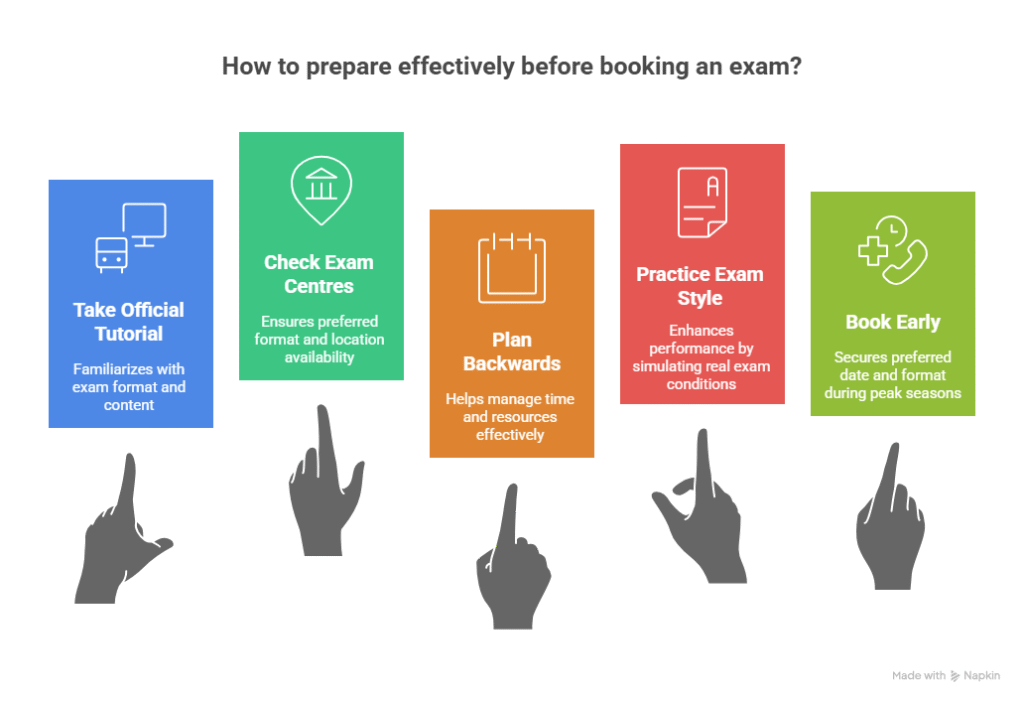
Preparation Tips Before You Book
- Take the official CB tutorial
- Check which centres in your city offer your preferred format
- Plan backwards from your deadline
- Practice in the exact exam style you’ll use
- Book early during peak seasons
Final Takeaway
There’s no universally easier format. The right choice depends on your habits, comfort level, and timeline. With consistent preparation, both options can lead you to your target IELTS band.
Need Coaching or Guidance?
Get support from InSync Learning and Development, including free trial speaking sessions led by former British Council Examiner Shane Jordan.Visit: www.learninsync.in
Call: 9962091700 / 8939374953 / 9962180272