IELTS coaching in Chennai

Is IELTS Difficult for Indian Students?

Is IELTS Difficult for Indian Students?

Many Indian students feel nervous even before starting IELTS preparation. Some believe the exam is extremely difficult, while others hear stories about students failing repeatedly despite studying for months. The truth is more balanced. IELTS is not impossible, but it is also not an exam that can be cleared through memorization alone. Students who understand the exam format, practice consistently, and improve their communication skills usually perform much better than those who depend only on shortcuts or random preparation materials. One reason IELTS feels difficult for many Indian students is because the exam tests practical English usage in real-life situations. It focuses heavily on: At InSync Learning and Development, many students initially join with the fear that IELTS is too difficult for them. However, under the guidance of a former British Council IELTS Examiner who has examined over 35,000 test takers, they often realise that smart preparation matters far more than “perfect English.” This article explains why IELTS feels difficult for many Indian students, the most common challenges candidates face, and what actually helps improve band scores effectively. Is IELTS Really Difficult? The difficulty level of IELTS depends on several factors, including: For students who regularly use English in daily life, IELTS may feel manageable after a few months of focused preparation. For others, especially students who rarely speak or write in English outside academics, the exam can initially feel challenging. However, one important thing many students misunderstand is this: IELTS is not designed to test “perfect English.” Examiners are not expecting candidates to sound like native speakers. Instead, they evaluate whether students can: This is why many average students successfully achieve Band 7 or higher every year. At InSync, students are trained using examiner-focused preparation methods instead of memorization-based techniques. The program includes: This structured approach helps reduce exam fear and improves preparation consistency. Students who want to understand effective IELTS preparation strategies can also explore this guide on free IELTS materials online to find reliable study resources without wasting time on low-quality materials. Why Many Indian Students Find IELTS Difficult Many Indian students are intelligent and hardworking, but they still struggle in IELTS because the exam requires a different type of English preparation compared to traditional school or college learning. Weak Speaking Confidence One of the biggest problems Indian students face is lack of speaking confidence. Many candidates: but still hesitate while speaking. This usually happens because students are not used to communicating in English naturally during daily life. Common Speaking problems include: In IELTS Speaking, confidence and natural communication matter more than “perfect English.” At InSync, students attend dedicated Speaking fluency sessions regularly to improve spontaneous communication skills instead of depending on memorized responses. Students can also explore these real IELTS student success stories and testimonials  to understand how confidence-building and structured practice help candidates improve their scores. Problems in IELTS Writing Writing is usually the most difficult module for Indian students. Many candidates struggle because they try to write overly complicated English instead of focusing on clarity. Common IELTS Writing mistakes include: At InSync Learning and Development, Writing preparation focuses heavily on: Students receive detailed feedback and estimated band scores so they understand exactly where marks are lost and how improvement happens practically. Candidates who struggle with essay writing can also read this guide on IELTS Writing Task 2 introduction mistakes to avoid one of the most common problems Indian students face in IELTS essays. Time Management Problems in IELTS Reading Many Indian students find IELTS Reading difficult not because the passages are impossible, but because they struggle to complete all questions within the time limit. The Reading test requires: Students who are used to slow academic reading often spend too much time trying to understand every single word. As a result, they panic during the final sections of the test. Another common issue is paraphrasing. IELTS rarely repeats the exact words from the passage in the questions. Instead, it uses: Students who do not practice this skill regularly often lose marks even when they understand the overall passage. At InSync, Reading preparation includes weekly timed mock tests and detailed discussion sessions where students learn: This type of structured practice helps students become more comfortable with exam pressure over time. Students preparing independently can also explore this guide on best platforms to book IELTS mock tests online to practice under realistic IELTS conditions. Listening Concentration Problems Many Indian students believe IELTS Listening will be easy because they understand English movies or YouTube videos. However, the actual IELTS Listening test requires very focused attention. Students often lose marks because of: Unlike casual listening, IELTS Listening gives candidates only one chance to hear the audio. This creates pressure, especially for students who are not familiar with: Another common mistake is focusing too much on one missed answer. Students panic after missing a word and lose focus on the next few questions as well. Strong Listening scores usually come from: At InSync Learning and Development, students regularly practice Listening under exam conditions through weekly mock tests and review sessions that help them identify recurring mistakes before the actual exam. The Biggest Myths About IELTS in India One reason IELTS feels difficult for many Indian students is because of misinformation and unrealistic myths surrounding the exam. These myths often create unnecessary fear before preparation even begins. “Only Fluent English Speakers Can Score High” This is one of the biggest misconceptions about IELTS. Many students believe Band 7 or Band 8 is possible only for students who speak English fluently from childhood. That is simply not true. Every year, thousands of Indian students from regional language backgrounds achieve strong IELTS scores through: IELTS does not require “perfect English.” It requires effective communication. Students who communicate clearly and avoid major grammar mistakes often perform much better than students trying to sound overly advanced. “You Need Fancy Vocabulary for Band 7+” Many Indian students spend months memorizing difficult vocabulary lists because they think complex words automatically improve Writing and Speaking scores. In

Is IELTS Difficult for Indian Students? Read More »

IELTS Writing Task 2: The Biggest Mistake Indian Students Make in Introductions

IELTS Writing Task 2: The Biggest Mistake Indian Students Make in Introductions

Many Indian students lose marks in IELTS Writing Task 2 before the examiner even reaches the body paragraphs. The problem usually starts in the introduction. Students often believe that a high-scoring IELTS introduction must sound extremely formal, complicated, or “advanced.” Because of this, they try to use memorized templates, difficult vocabulary, or long sentences that sound unnatural. Instead of improving the essay, these introductions usually create grammar mistakes, unclear ideas, and weak task response. In reality, IELTS examiners are not looking for decorative English. They want: At InSync Learning and Development, many IELTS candidates are surprised when they discover that simple, direct introductions often score higher than complicated ones. Under the guidance of a former British Council IELTS Examiner who has examined over 35,000 test takers, students learn how examiners actually evaluate IELTS essays instead of relying on outdated writing myths. This article explains the biggest introduction mistake Indian students make in IELTS Writing Task 2, why it affects band scores, and how to write introductions that sound natural, clear, and examiner-friendly. Why IELTS Task 2 Introductions Matter Many students underestimate the importance of the introduction because they believe the main arguments matter more. While body paragraphs are extremely important, the introduction still plays a major role in the examiner’s first impression of the essay. A strong introduction immediately shows: A weak introduction often signals the opposite. If the opening feels memorized, confusing, or poorly structured, the examiner may already notice problems related to: This is why experienced IELTS trainers focus heavily on introduction writing during preparation. At InSync, students regularly practice Writing Task 2 introductions during mock tests and receive detailed feedback on: This helps students avoid repeating the same Writing mistakes in the actual exam. Students looking to improve their IELTS Writing preparation can also explore these real student success stories and testimonials  to understand how structured feedback improves Writing performance over time. The Biggest Mistake Indian Students Make in IELTS Introductions The biggest mistake Indian students make in IELTS Writing Task 2 introductions is overcomplicating the opening paragraph. Many students try too hard to sound “academic” or “high level.” As a result, they write introductions that are: Instead of helping the essay, this usually lowers the overall Writing score. Memorized Opening Lines Many Indian students still begin essays with lines like: These phrases have become extremely common in IELTS Writing. Examiners read hundreds of essays regularly. Memorized openings are very easy to identify and often make the writing sound artificial. Strong IELTS introductions should feel natural and directly connected to the essay question. Trying to Use Extremely Difficult English Another common mistake is forcing advanced vocabulary into simple ideas. For example, instead of writing: “Many people prefer online education.” students may attempt: “A plethora of individuals are inclined towards the proliferation of digital pedagogical methodologies.” This usually creates: IELTS Writing rewards clear communication more than complicated vocabulary. A simple sentence written accurately will always score better than a confusing sentence filled with unnecessary words. InSync Learning and Development, students are trained to focus on clarity first. Writing correction sessions and estimated band score feedback help candidates understand how examiners actually evaluate essays instead of chasing “fancy English.” Students preparing independently can also improve their preparation through this guide on free IELTS materials online, which explains how to use reliable IELTS resources more effectively. Not Answering the Actual Essay Question Another major mistake Indian students make in IELTS Writing Task 2 introductions is failing to answer the actual question properly. Many candidates spend too much time trying to paraphrase the topic in complicated language and completely forget to present their opinion or response clearly. For example, if the essay asks: “Do you agree or disagree?” the introduction should clearly show the writer’s position. However, many students write vague openings that never directly answer the task. This creates problems in: Examiners should not have to guess what the writer thinks. A strong IELTS introduction immediately tells the reader: This is one reason why many students continue scoring Band 6 or 6.5 in Writing even after months of preparation. At InSync, Writing correction sessions focus heavily on helping students understand: This examiner-focused approach helps students improve Writing accuracy much faster. What Examiners Actually Want in an IELTS Introduction Many students believe examiners expect highly sophisticated English in the introduction. That is not true. IELTS examiners primarily look for: A high-scoring introduction does not need: In fact, overly dramatic introductions often reduce clarity and increase grammar mistakes. The best IELTS introductions are usually short, simple, and direct. A Simple IELTS Introduction Structure That Works A strong IELTS Writing Task 2 introduction usually follows this structure: 1. Paraphrase the Question Rewrite the topic naturally using your own words. 2. Give Your Opinion or Main Position Clearly answer the task question. 3. Mention Essay Direction (Optional) Briefly indicate what the essay will discuss. This structure works because it keeps the writing: Most importantly, it reduces the risk of unnecessary mistakes. Example of a Weak vs Strong IELTS Introduction Essay Question “Some people think online learning is better than classroom learning. Do you agree or disagree?” Weak Introduction “In today’s modern era, education has become a controversial issue among people. Every coin has two sides and online learning has both merits and demerits which will be discussed in this essay.” Problems: Improved Introduction “Many people believe that online learning is more effective than traditional classroom education. I partly agree with this view because online education offers flexibility, although classroom learning still provides important face-to-face interaction.” Why this works: This is exactly the type of clarity examiners prefer in IELTS Writing Task 2. At InSync Learning and Development, students regularly practice introduction writing during weekly mock tests and receive detailed feedback from experienced trainers. This helps them avoid common mistakes before the actual IELTS exam. Students preparing for Writing improvement can also explore this guide on best platforms to book IELTS mock tests online  to practice under realistic exam conditions. Why Indian Students Specifically

IELTS Writing Task 2: The Biggest Mistake Indian Students Make in Introductions Read More »

IELTS Academic vs General Training: Which One Do You Need? (2026 Guide)

IELTS Academic vs General Training: Which One Do You Need? (2026 Guide)

Choosing between IELTS Academic and General Training is one of the most common doubts among students in India. Many candidates start preparation without understanding which test they actually need. This often leads to confusion, wasted time, and sometimes even booking the wrong exam. The difference between the two is not just about difficulty. It is about purpose. Your choice depends on whether you want to study abroad, migrate, or work in another country. A wrong decision at this stage can delay your plans. When you learn from a former British Council IELTS examiner, one thing becomes very clear. The test you choose should always match your goal, not what others are doing. Many students simply follow friends or trends, which creates problems later. In this guide, you will clearly understand the difference between IELTS Academic and General Training. More importantly, you will know exactly which one you need based on your situation. What is IELTS? IELTS stands for the International English Language Testing System. It is one of the most widely accepted English proficiency tests in the world. It is required for study, work, and migration in countries like Canada, the UK, Australia, and New Zealand. The test evaluates four main skills: While the Listening and Speaking sections remain the same for all candidates, the Reading and Writing sections differ based on the type of test you choose. There are two main types of IELTS: Each is designed for a specific purpose. Understanding this difference is the first step toward making the right decision. If you are planning to start your preparation, it is always better to first understand the exam structure and requirements. You can explore detailed guidance and training options here:   What is IELTS Academic? IELTS Academic is designed for students who want to pursue higher education abroad. If you are planning to apply to universities or colleges, this is the test you will need. The focus of IELTS Academic is on formal and academic English. The reading passages are longer and more complex. They are often taken from books, journals, and research articles. The writing section also requires you to analyse data, describe charts, or present structured arguments. This test checks whether you are ready to handle an academic environment where you will read complex materials and write formal assignments. Who should take IELTS Academic? Many students assume that Academic is always better or more valuable. This is not true. The test is only useful if it matches your goal. If you are unsure, getting proper guidance at the beginning can save a lot of time. Many students prefer structured programs such as this ielts coaching in Chennai where they receive clarity before starting preparation. What is IELTS General Training? IELTS General Training is designed for people who want to migrate, work, or settle abroad. Unlike the Academic test, it focuses on everyday English used in real-life situations. The reading section includes materials such as advertisements, notices, and workplace-related texts. The writing section is also more practical. You may be asked to write a letter, such as a complaint, request, or job-related communication. This test checks whether you can handle daily communication in an English-speaking country. Who should take IELTS General Training? Many Indian students aiming for Canada PR choose General Training because it matches immigration requirements. However, one important thing to understand is this. General Training is not “easy” in the way many people think. It still requires proper preparation, especially in writing and speaking. If you want to understand how students improve their performance with the right strategy, you can read this detailed guide: IELTS Academic vs General Training: Key Differences This is the most important part of your decision. While both tests assess the same four skills, the purpose and difficulty level differ in key areas. PurposeAcademic is for higher education. General Training is for migration and work. Reading SectionAcademic reading includes long, complex passages taken from academic sources. General reading focuses on shorter, practical texts related to daily life. Writing SectionAcademic writing includes describing charts or graphs and writing formal essays. General writing includes letter writing and a simpler essay format. Difficulty LevelAcademic is generally considered more challenging, especially in reading and writing. General Training is more straightforward but still requires a clear strategy. Scoring SystemBoth tests use the same band score system. A high score requires strong performance in all sections, regardless of the test type. Understanding these differences helps you avoid a common mistake. Many students choose Academic thinking it is more valuable, even when they actually need General Training. If you want to see why choosing the wrong strategy affects your score, this article explains it well: Which IELTS Should You Choose in India? Your choice should depend completely on your goal. There is no “better” test. There is only the right test for your situation. If you are planning to study abroad, especially for undergraduate or postgraduate courses, you should take IELTS Academic. Universities require this test to assess your ability to handle academic content. If your goal is immigration, such as Canada PR, IELTS General Training is the correct option. Most immigration programs specifically require this format. If you are a healthcare professional, such as a nurse, then you will probably need to sit for the Academic IELTS to register with professional bodies. If you are planning to work abroad, General Training is usually sufficient. However, it is always better to check the exact requirements of the country or employer. This is where many students get confused. They rely on friends or agents instead of verifying official requirements. That often leads to delays and unnecessary expenses. When you learn from a former British Council IELTS examiner, this step becomes much clearer. Proper guidance at the beginning saves time and helps you prepare in the right direction. If you are still unsure, it is always better to get clarity before you start preparation. You can also explore structured guidance options here: Common Mistakes Students Make Choosing the wrong

IELTS Academic vs General Training: Which One Do You Need? (2026 Guide) Read More »

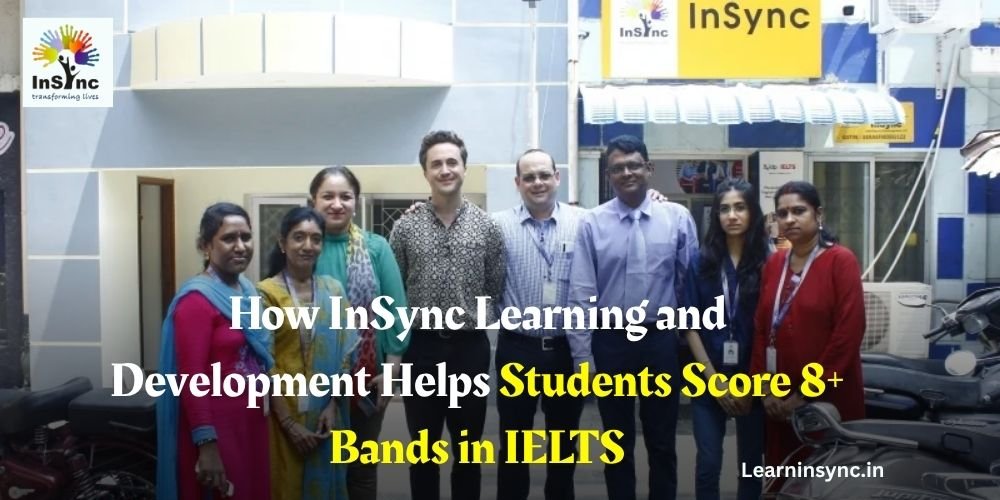
How InSync Learning and Development Helps Students Score 8+ Bands in IELTS

How InSync Learning and Development Helps Students Score 8+ Bands in IELTS

Why Scoring 8+ Bands in IELTS is Challenging Achieving 8+ bands in IELTS is a goal many students set for themselves, especially those applying to top universities or competitive immigration programs. However, moving beyond Band 6.5 or 7 is where most candidates struggle. Many students preparing through IELTS coaching in Chennai or through self-study often discover that improving from Band 7 to Band 8 requires a deeper understanding of the exam. The reason is simple. IELTS is not only a test of English ability. It is also a test of structured communication and examiner expectations. Many students spend months studying vocabulary lists and grammar rules, yet their band scores remain the same. This usually happens because they do not fully understand how examiners evaluate writing and speaking responses. Common issues include: Another major challenge is the lack of structured feedback in most coaching centres. Students attend classes, complete practice tests, but rarely receive detailed feedback that shows exactly why they lost marks. Without understanding the band descriptors used by examiners, it becomes difficult to improve from Band 7 to Band 8. This is where Shane’s expertise as a former IELTS examiner is invaluable because he knows exactly what examiners look for for band 7+ in both writing and speaking. This is why high band IELTS preparation requires a very different training approach, one that focuses on how examiners actually award band scores. The InSync Difference – Examiner-Led IELTS Coaching One of the main reasons students choose InSync Learning and Development is the unique advantage of learning directly from an IELTS examiner who has assessed thousands of test candidates for writing and speaking modules. The institute is spear-headed  by Shane Jordan, a Cambridge-certified IELTS examiner with more than 24 years of teaching experience. Over the years, he has assessed 30,000+ IELTS candidates, giving him deep insight into how examiners evaluate speaking and writing tasks. 8 out of 10 students get their dream scores in the very 1st attempt. Shane is CELTA and DELTA certified and has a Master’s Level degree in “ Teaching English for Academic Purposes” (TEAP) from the University of Glasgow, in the UK. Shane has worked for the British Council in Chennai as an English teacher, teacher trainer and IELTS examiner. Students at InSync are trained by someone who understands exactly how IELTS examiners award band scores. This perspective helps students avoid the common mistakes that prevent them from reaching Band 8+. If you want to explore available programs, you can view the complete list ofIELTS and English training options on the course page. Many candidates struggle to move beyond Band 6.5, and you can understand the reasons in detail in our guide on why some learners get stuck on 6.5 in IELTS. Step-by-Step Method Used at InSync to Achieve 8+ Band High band scores rarely happen by accident. At InSync Learning, training follows a structured system designed to improve each IELTS skill area step by step. The lessons are highly engaging and student centered focusing on building essential test skills through task-based methodology integrated with the communicative approach to learning English. Also, Read – IELTS Coaching by Shane Jordan – Cambridge-Certified Examiner Writing Band 8 Strategy Framework Writing is often the most difficult section for candidates aiming for Band 8. The writing assessment criteria are pitched at a very high level requiring candidates to demonstrate a wide range of sub-skills  such as fluency, good control of grammar and punctuation,  skillful use of coherence and cohesion, wide range of topic vocabulary and accuracy, range and variety of complex sentence structures. Students are trained to develop: Each essay is reviewed using examiner-style correction methods, so students can understand exactly where marks are gained or lost.  Regular writing practice combined with detailed feedback gradually improves clarity, structure, and accuracy, which are essential for Band 8 performance. If you want to improve your essay structure and reach a higher band, read our complete IELTS Writing Task 2 Band 7 guide Speaking Confidence & Fluency Model Many students struggle in the speaking test because they focus too much on memorizing answers. Instead, the training model focuses on natural communication. Students practice: • Real-time speaking corrections• Understanding IELTS band descriptors• Pronunciation improvement• Fluency development exercises Mock speaking interviews are conducted regularly so students become comfortable with the exam format and timing. This helps them speak confidently and respond naturally during the actual test. Reading & Listening Accuracy System Reading and listening sections require speed and accuracy. Students are trained to develop effective techniques such as: • Time management strategies• Identifying distractor answers• Error pattern analysis• Weekly performance tracking Regular mock tests help students understand where they lose marks and how to improve their accuracy in future practice sessions. Personalized Feedback That Improves Scores Faster One of the biggest advantages of training at InSync Learning and Development is the emphasis on personalized feedback. Instead of only classroom teaching, students receive performance-based coaching. This includes: • One-to-one writing corrections• Individual speaking evaluations• Detailed performance reports• Target band strategy planning Each student receives feedback based on their strengths and weaknesses, making the learning process far more effective than general classroom instruction. Why 766+ Students Rated InSync 4.9/5 on Google Reputation plays an important role when choosing an IELTS coaching institute. Over the years, InSync Learning and Development has earned the trust of hundreds of students. The institute currently has 766+ positive Google reviews with an impressive 4.9/5 rating. Many students highlight the same reasons in their feedback: You can read student experiences directly on the testimonial page. Students also share updates and learning tips through the institute’s social channels, such asInstagram,YouTubeLinkedIn Suggested – How to Convert PTE Scores into IELTS Bands Success Stories – From 6.5 to 8+ Band Score Many students join IELTS coaching after receiving scores such as 6.5 or 7, which are not enough for their academic or immigration goals. With structured preparation and focused feedback, significant improvement becomes possible. Common score improvement journeys include: • 6.5 to 7.5 in Writing• 7

How InSync Learning and Development Helps Students Score 8+ Bands in IELTS Read More »